Food escapades in modernist cuisine

Blender: Ultimate Wine Aerator

Volume 4 of Modernist Cuisine has a great chapter on wine and makes the rather surprising recommendation of hyperdecanting wine using a blender - yes, a blender! I'm not a huge wine buff and although I drink wine regularly, I never usually take the time to aerate or decant my wine. I'm already limited on kitchen storage so I didn't want to buy a huge glass pitcher or another gadget like the Vinturi to take up even more space. It turns out I don't need any of that stuff, as the best wine decanter has been sitting in my kitchen all along.

According to Modernist Cuisine, the two main benefits of decanting are oxygenation and outgassing. Oxygenation is when air dissolves in the wine, while outgassing is when dissolved gases and compounds like sulfur vent into the air. Both of these phenomena improve the flavor of the wine.

Yesterday I tried this technique of hyperdecanting wine using my Vitamix, and I have to say I was really impressed. We opened up a rather young (2010) Spanish red wine made from Garnacha grapes by the Tres Picos vineyard, tasted some, and then poured some into our Vitamix to hypercant. After giving it a whirl for 30-60 seconds, we tasted some of the hyperdecanted wine, and there was a noticeable difference. The hyperdecanted wine was much more mellow and incredibly smooth. This is definitely a trick I'm going to use from now on when drinking red wine.


Vietnamese Summer Rolls: Sous Vide Pate, Fresh Herbs, Pickled Vegetable

Last night my wife was supposed to pick up some fish through work but she ended being too busy in the office during the day, so instead on her way home she stopped by the Chinese supermarket to pick up a few things. We ultimately decided to make some Vietnamese style summer rolls.

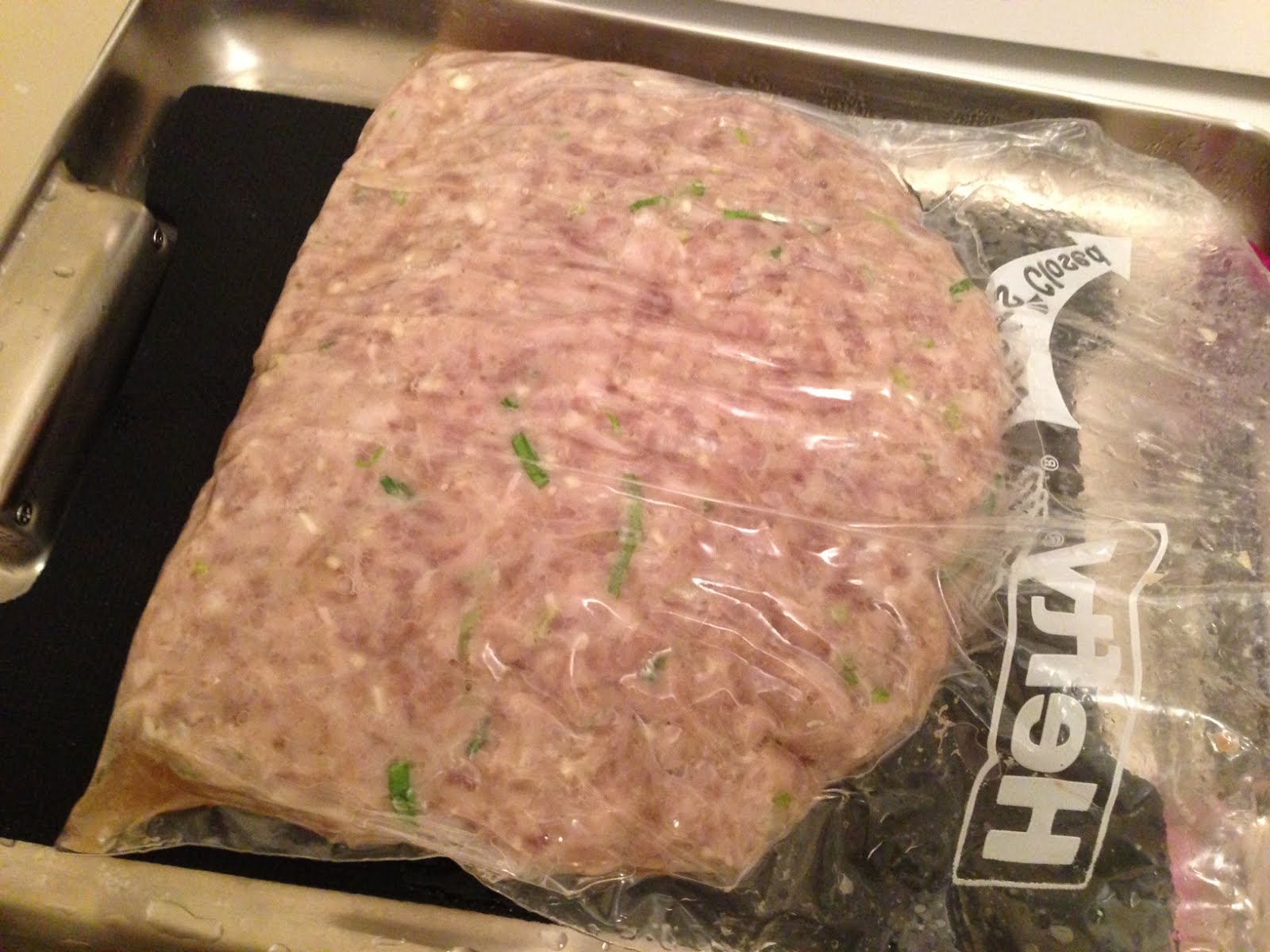
For the summer roll filling, I wanted to try a recipe I found online for nem nuong, or Vietnamese style grilled pork sausage. David Chang has a version in his Momofuku cookbook that includes lemongrass but I decided to improvise a little since we didn't have any on hand. With some ground pork, I mixed together some honey, sugar, salt, finely chopped garlic, sliced green onion, and fish sauce. After kneading the meat for a minute or so, I threw the mixture into a ziploc bag and removed all the excess air using the water displacement method. I set my Sous Vide Supreme to 150 degrees and then dropped in the ziploc bag.

While the sausage meat was cooking, we used the time to prepare the rest of our ingredients for the spring rolls, including some pickled carrots and cucumbers, simply sauteed shrimp, romaine lettuce, and picked thai basil and mint.

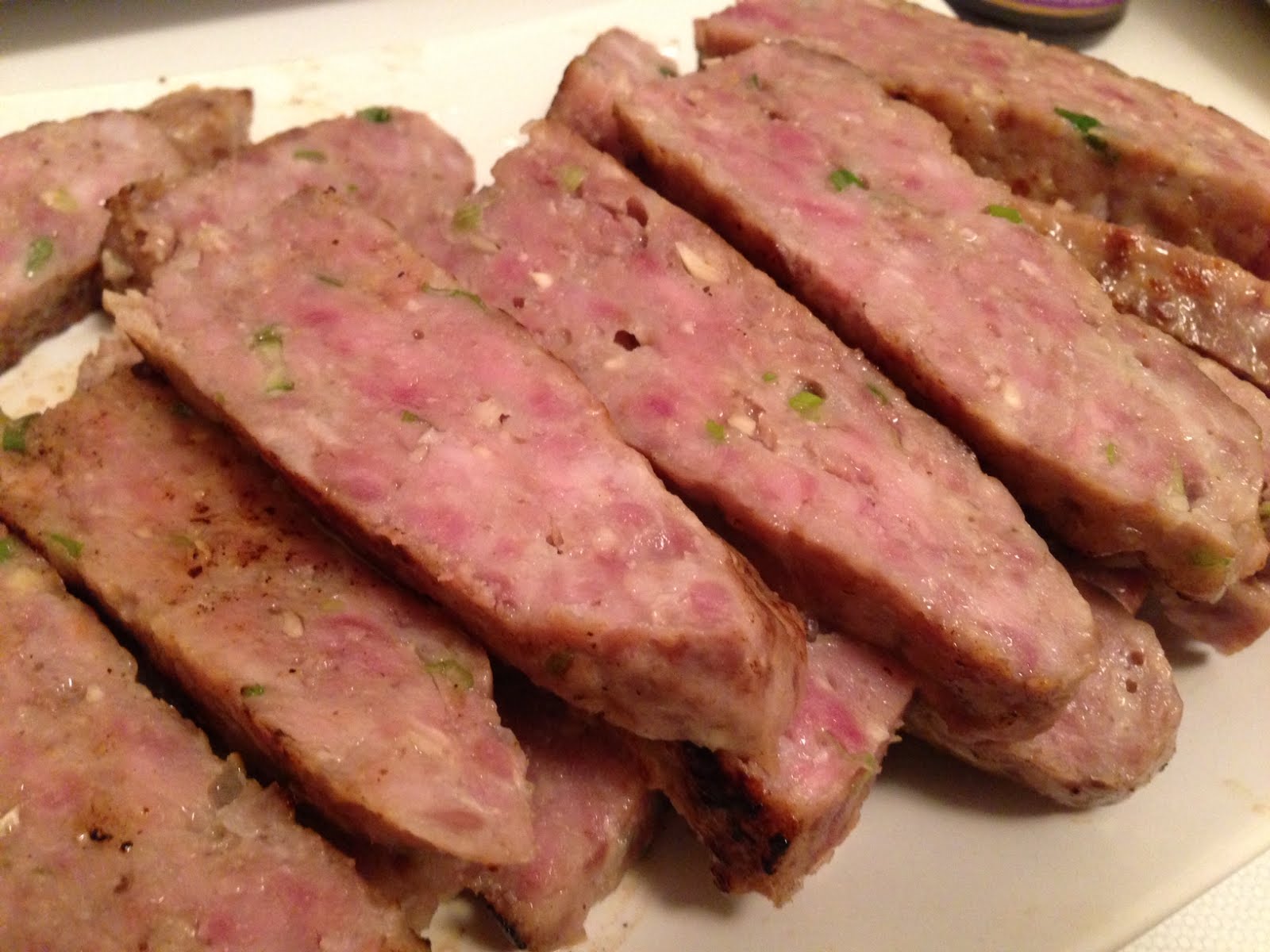
After about an hour or so, the huge block of sausage patty meat was done cooking. The meat firmed up quite nicely, and I was actually really happy with the consistency of the meat. Cutting into the meat reminded me of a French terrine or pate that my mother used to make, which makes sense since a pate is nothing more than a fancy meatloaf. The sous vide method worked really well in cooking the meat evenly and gently enough so that all the fat didn't leach out of the mixture. I've seen recipes in Modernist Cuisine where creme brulee is done sous vide, so it makes sense why something like pate typically cooked gently in a bain marie would also work well being cooked sous vide.

I did a quick sear on the meat to get some color on the outside of the meat, and we then finished putting together the spring rolls. Using some hot water, we softened the dried rice paper wrappers and then filled each of them with the spring roll filling ingredients. With this on the side, we served up some plain white rice.


Cinnamon: Interesting Factoid

Last night as I was leaving work and coming down from the Pru, there was an interesting factoid shown on the screen in the elevator regarding cinnamon. Apparently cinnamon has a number of antifungal, antiviral and antimicrobial properties. I did some further digging on the internet and found, for example, that studies have shown cinnamon can eliminate E. coli in unpasteurized apple cider as well as inhibit growth of harmful bacteria like the food-borne pathogenic Bacillus cereus. Now it makes all the sense in the world what I read in Modernist Cuisine regarding the typical seasoning of Medieval cuisine. In Volume 1, the book goes into the whole history and origins of our food, and apparently during the Middle Ages, most cuisine across Europe was essentially the same, featuring imported spices such as pepper, ginger, saffron and cinnamon. If hygiene and sanitation were particularly poor (as they were at the time), heavily seasoning foods with spices having inherent virus and bacterial fighting properties would be ideal and more likely a result of health / safety / survival reasons than perhaps taste.


24 Hour Sous Vide Leg of Lamb with Cous Cous

Over the weekend, my wife and I had to make a stop at BJ's to stock up on paper supplies and toilettries and while we were there, we picked up a small piece of boneless leg of lamb for around 6 dollars a pound. I don't cook leg of lamb that often and the one time I did a few summers ago over my parents' house on their propane grill, it didn't turn out quite as tender as I would have liked. This time around I wanted to try cooking it sous vide.

Since my wife and I were just cooking for the two of us, we cut the 3 pound leg of lamb into two pieces, reserving about a third to be frozen for a future use. I also butterflied the meat to make it more even and also allow for more surface area to be marinated.

I threw together a quick marinade using my Vitamix and blitzed together one head of garlic, a handful of dried rosemary, salt, pepper, onion powder, olive oil, and ground coriander until a loose paste formed. To a large ziploc bag I added the leg of lamb and then slathered the marinade all over the meat.


Using the water displacement method, I removed as much air as possible from the ziploc bag and then threw it in my sous vide tool to begin cooking. I have an old school Sous Vide Supreme, but there are many better, cheaper sous vide options available now such as Joule and Anova. I went back and forth on the time and temperature to use for the cooking based on conflicting research. In a video on youtube, Douglas Baldwin cooked his leg of lamb at 130 degrees for 24 hours. In Volume 6 of Modernist Cuisine under "Best Bets for Cooking Tough Cuts", leg of lamb isn't listed as a protein but lamb shoulder is with a recommended temp of 133 degrees for 48 hours. Then I found a post on the Serious Eats blog that recommended between 8-12 hours of cooking time, advising against anything over that due enzymatic forces adversely affecting the texture of the meat. Ultimately, I decided to go with 133 degrees for 24 hours.


24 hours later after I came home from work, I pulled the leg of lamb out of the water bath. When I opened up the bag, a super intense, garlicky aroma hit me in the face. I was a bit concerned at first, worried that I created a garlic bomb by putting too much garlic in the marinade, but after tasting the meat later, it was actually perfect. After removing the meat from the bag, I tried off the meat and quickly seared it in a hot pan.


After the meat developed a nice brown crust, I removed the meat from the pan and let it rest. Using the same pan I used to sear the meat, I added the leftover juices and oil from the zip loc bag to make a quick sauce. To this, I added a few spoonfuls of dijon mustard along with some white balsamic vinegar in order to make a vinaigrette of sorts.

Meanwhile, in a seperate pot on the stove, I brought some water to a boil to cook some cous cous. Cous cous is probably one of the easiest side dishes you can make and takes hardly any time at all. Once the cous cous absorbed the water, I seasoned it with some salt and pepper and mixed in some dried cranberries.


Overall, this dish was very tasty and I would absolutely make it again. My wife who typically does not enjoy lamb ended up going back for extras. The lamb was incredibly tender and not too gamey. The quick sauce we made also paired nicely with it, providing a little acidic kick from the mustard and vinegar. Cous cous and lamb naturally make sense together, but the dried cranberries also added a nice touch with just a little sweetness.

Pressure Cooked Carnitas

My wife has quite the international background, and while she was born in China, she actually spent the majority of her childhood in Panama before moving to the US as a young teenager. While growing up in Panama, she and her family had a maid that would cook meals for them. One of my wife's favorite dishes was carnitas, and she said the maid would cook it in a pressure cooker.

Pressure cooking is gaining more popularity nowadays and it's featured as a cooking technique in the Modernist Cuisine cookbook, but pressure cooking actually is really old school. There's evidence that pressure cooking was invented and used as early as the 1600s.

I had never actually seen a pressure cooker until watching an episode of Iron Chef on the Food Network. On Iron Chef, contestants have an hour to cook the secret ingredient, which in this case was beef chuck, a tough cut of beef that typically requires long amounts of cooking to become edible. The Iron Chef used a number of pressure cookers to quickly breakdown and tenderize the secret ingredient. That sparked my interest in pressure cookers - if an Iron Chef used them, why shouldn't I?

If you aren't familiar with pressure cookers, here's the skinny on how they work. In an ordinary non-pressurised cooking pot, the boiling point of water is 212 °F. However, in a sealed pressure cooker, the boiling point of water can increase to a much higher temperature because of the pressure that builds up in the pot due to the steam trapped inside. This higher temperature water and vapor transfers heat very rapidly to the food, dramatically shortening the cooking process.

For a party we recently attended, we made some carnitas using the recipe my wife's family maid followed years ago. It's actually really easy and doesn't take much time at all using a pressure cooker.
We went to our local grocery store and purchased some pork shoulder - it's a pretty inexpensive cut of meat that shouldn't cost more than a couple dollars per pound.


We cut this into a few large chunks and seasoned them liberally with a combination of salt, pepper, garlic powder, onion powder, and oregano. We then browned the meat in the bottom of the pressure cooker pot.


After browning the meat, we threw in some roughly chopped celery, green bell pepper, onions and garlic and let these aromatics sweat down a bit. After a few minutes, we then added water - yep, plain water - enough to just cover the meat and vegetables.


We brought this up to a boil, sealed the lid on the pressure cooker, and let it rip for about an hour. Here's the final result:


The carnitas are great and about as good as you would find at any local Mexican restaurant. We typically eat this as tacos with some store-bought corn tortillas and a quick homemade pico-de-gallo.

Quick Whipped Cream in Vitamix

Every year for Christmas we go to a family member's house to celebrate. My parents and aunts / uncles take turns hosting, but everyone brings a dish so it ends up being a huge potluck. This year my wife and I made a tres leches cake using Emeril Lagasse's recipe. It turned out tasting great but the top of the cake wasn't the most aesthetically pleasing from all of the holes we poked to distribute the milk glaze. As a result, we decided to make some whipped cream to spread on the top of the cake, but we were running low on time, so I used my Vitamix. The results weren't perfect but pretty decent. It took only about 10-15 seconds in the Vitamix to take the loose liquid cream to soft-medium peaks. It's a good trick to have if you're ever pinched for time.


Modernist Foodie Copyright © 2013